Golden Triangle Tour is among the famous travel circuit of India, connecting Delhi, Agra and Jaipur. Opting for a Golden Triangle Tour Package in India leads to a seamless and comprehensive trip, which is purpose-designed for spending quality time with heritage, culture and architectural marvels in little time. If you want to get the whole of India in one trip, these packages are for you.
The most important factor in choosing this tour is that it is one of the most popular travel destination of India and is considered the safest one too. Also, safety is one of the top reasons why you should choose Golden Triangle Tour Packages. This includes transportation, targeted hotel stays, sightseeing, and more of a local experience. This removes the hassle of coordinating travel sky between the cities, a huge relief for a first timers in India. The tour has India tour guides who are experts who will make sure every visit, whether to the Taj Mahal, Amber Fort, or Qutub Minar, is a highly interesting experience in terms of history and culture.
Golden Triangle tours come for varied range of travelers and budgets. From five-star hotel luxury stays to cost-effective yet comfortable accommodations, these packages can be customized based on your requirements. They also provide glimpses of true Indian experiences, such as traditional Rajasthani food, shopping for handicrafts in Jaipur, heritage places reminiscent of the Mughal style in Agra, etc.
Safety and reliability are the other two main benefits. Well-known travel operators coordinating Golden Triangle Tour Packages India generally make for protected visiting, on-time handovers, and proven lodgings. This assures peace of mind to the travelers, enabling them to explore the rich heritage of India worry-free.
Also, a Golden Triangle Tour Package in India is the perfect option for anyone travelling to the center stage of India, where culture, history, comfort, and ease become one.
P.S: This tour could be customized as per your interest.
With the Best Golden Triangle Tour Packages, you can travel to three popular cities, and people can collect sufficient information about India.
As one stages away with the Golden Triangle India tour package, individuals will be awed by the rich creativity and gifted craftsmanship of the Red Fort. They have worked with astounding flawlessness in building the Red Fort.
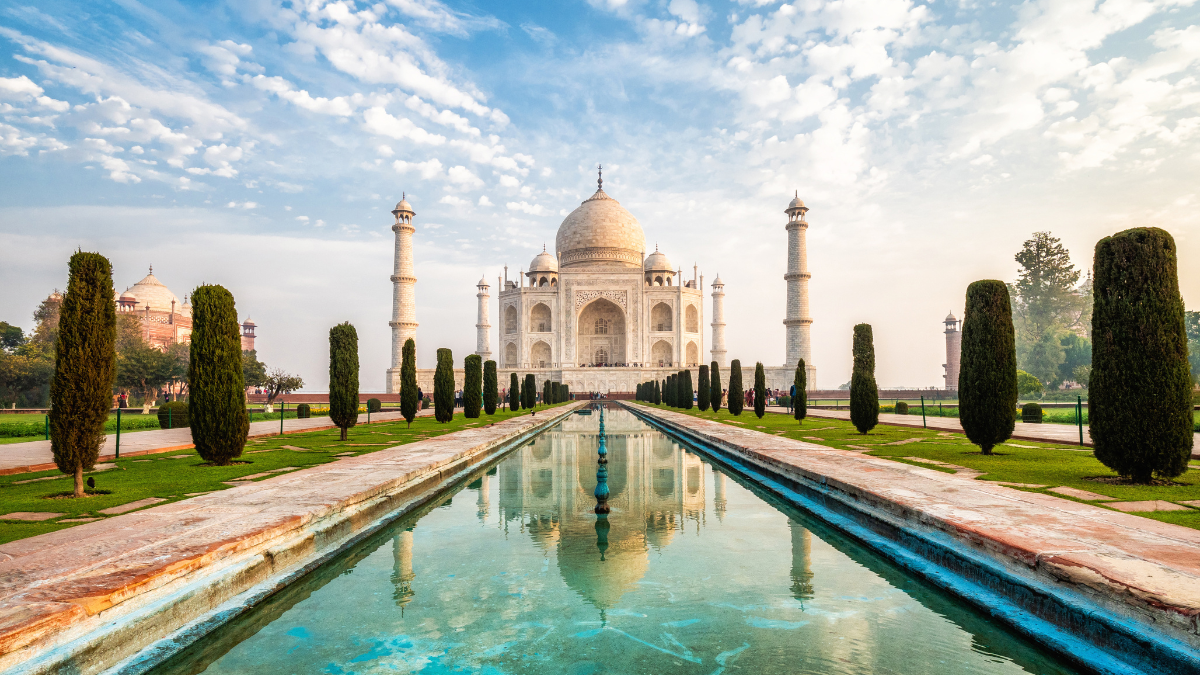
Akshardham temple in Delhi has picked up applause and built up a name in the Guinness Book for constructing huge religious sites. Moving further on to Agra, the Taj Mahal is the best piece of India. Aside from this, meeting Fatehpur Sikri, Agra Fort, and Sikandra gives an unmistakable knowledge of the Mughal foundation.
There are various monuments and historical events accessible in Jaipur, and one can encounter all with this tour.
Golden triangle packages are the ideal approach to know these three interesting and historical cities flawlessly. India has dependably been an amazing country, and such kinds of spots make it all the more interesting. Knowing the Golden Triangle tour is the ideal approach to comprehending the history and culture of India.
Below are listed some top Golden Triangle Holidays that are most preferred.
On arrival, you will be welcomed by our representative at the airport, after which is the transfer to the hotel.
Sightseeing of Old and New Delhi. The sightseeing of Old Delhi begins with a visit to Jamma Masjid, the largest mosque in India. It was built in the year 1650.
This is followed by a drive-past the Red Fort, built during the years 1639-1648, by the Moghol Emperor Shah Jahan, the creator of the famous Taj Mahal.
We later proceed to Raj Ghat, the memorial site dedicated to Mahatma Gandhi, who was cremated here following his assassination in January 1948.
After visiting Old Delhi, we proceed for a sightseeing trip of New Delhi which begins with a drive-past the Safdarjang’s Tomb, built in 1753-54, by the Nawab of Avadh for his father, Safdarajang. It is one the last exemples of Mughal architecture before the final remnants of the great empire collapsed.
We then reach the famous Qutub Minar (construction started in 1193 & completed in 1368). This striking medieval, soaring tower of victory is nearly 73 metres high and has five distinct storeys. Within the Qutub Minar Complex, and amidst the ruins of Quwwat-ul-Islam Mosque, stands the famous Iron Pillar, which has stood the vagaries of centuries and has not rusted at all for nearly 1600 years!!
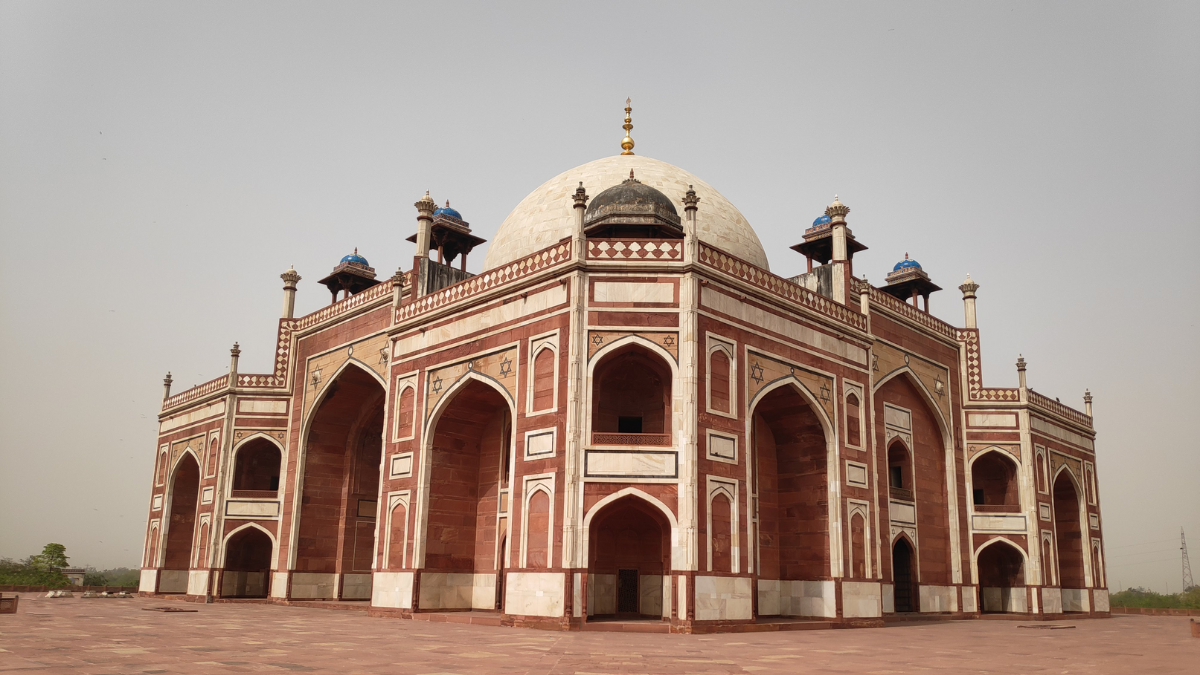
We then proceed to Humayun’s Tomb (World Heritage Monument), built in the mid-16th century by his Persian-born senior wife, Haji Begum.
We later drive through the Diplomatic Enclave, which houses the Embassies of most of the foreign countries.
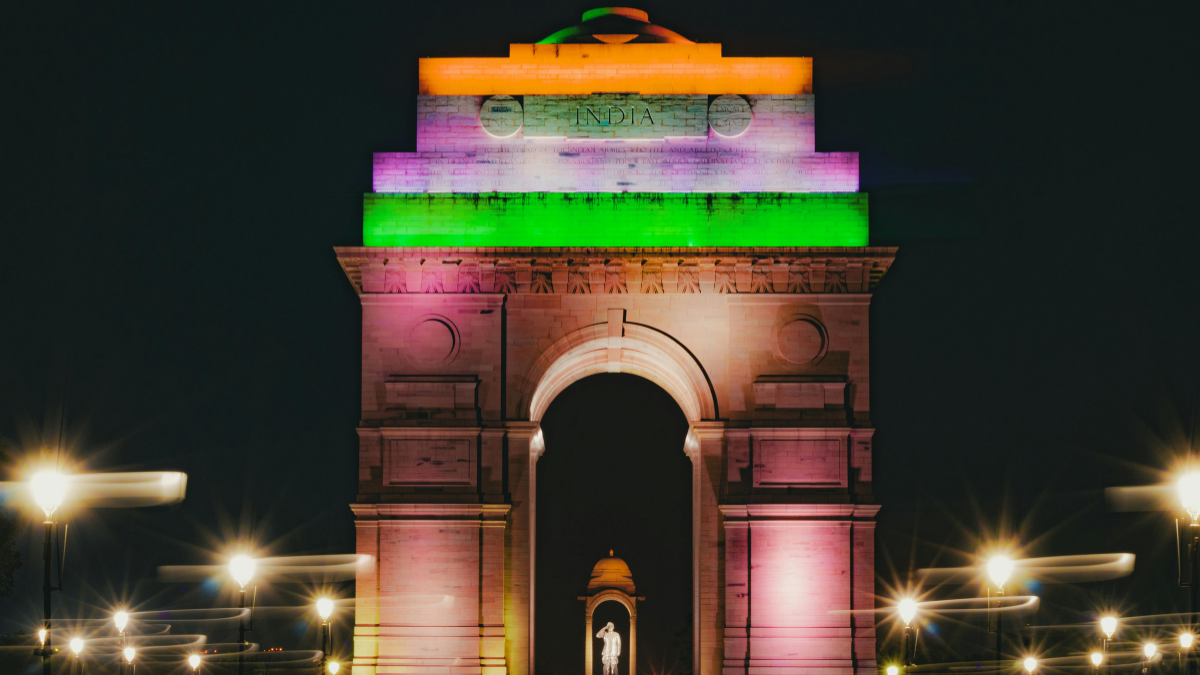
We shall make a short stop for a quick photo shoot at the India Gate and the Rashtrapati Bhavan, the official residence of the President of India, which was formerly the domicile of the last Viceroy of India. Finally we shall visit Connaught Place, the main and upmarket shopping area of New Delhi
(Distance 320 kms. / Travel time approximately 5 hours)
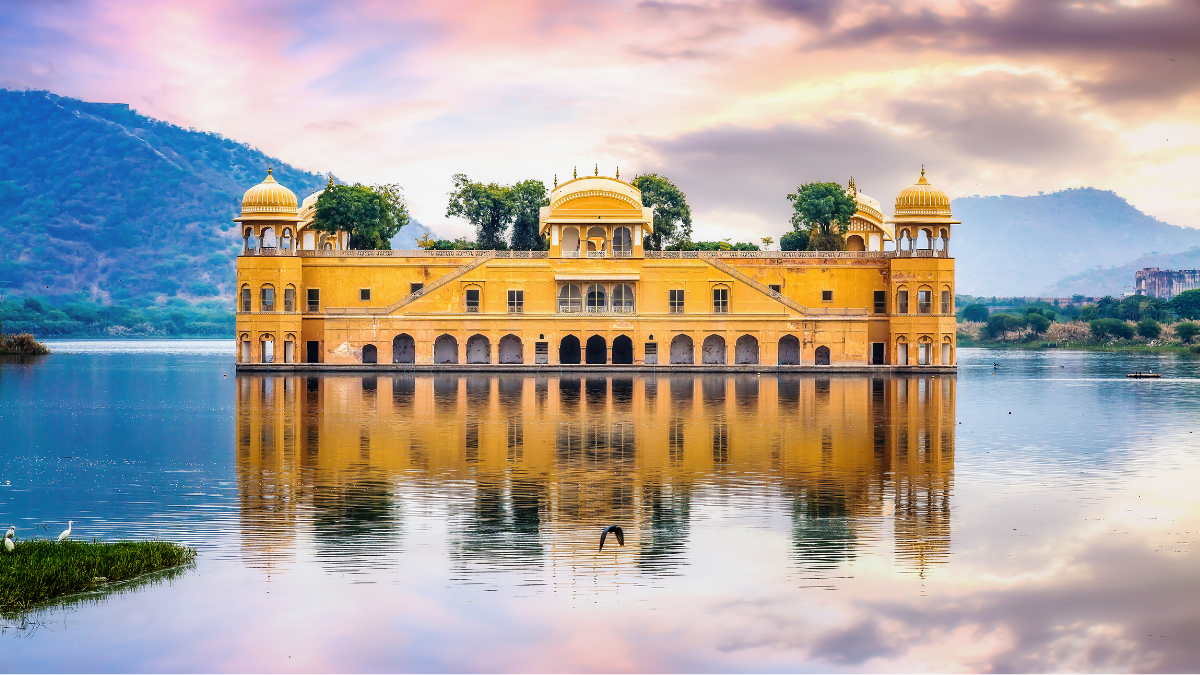
After breakfast, we shall proceed from Delhi to Jaipur. Upon arrival, we check-in at the hotel or After lunch, we proceed for a tour of the city’s iconic structures. First comes the Jantar Mantar, a magnificent stone observatory, built by Raja Jai Singh in 1728, known for his passion for astronomy. The Jaipur observatory is the largest and best preserved of the five he built, the other four being in Delhi, Varanasi, Ujjain and Mathura.
Later in the evening, we have a unique experience lined up for you, whereby you can discover, at first hand, the culinary delights of some typical Rajasthani cuisine and you could even try your hand at making some ‘chapatis’ and preparing a regional vegetable curry. You also have the option of a photo session with an entire family attired in the traditional Rajasthani style.
After breakfast, we proceed on an excursion to Amber Fort which is located about 12 kms. from Jaipur. It was the ancient capital of the Kachhwaha Rajput rulers. This unique wonder is a must on every tourist itinerary of Rajasthan. Construction of the fort-palace was begun in 1592 by Maharaja Man Singh, the Rajput commander of Akbar’s army. It was later extended by the Jai Singhs, before they moved their capital to Jaipur.
The Amber fort is a truly superb example of Rajput architecture, stunningly situated on a hillside and overlooking a lake. You will really cherish the ascent to the Palace on the back of brightly caparisoned elephant. We shall visit the multiple chambers and the hallways of this Palace which are famous for their designs and decorations.
We then visit the opulent City Palace, the former Royal residence, built in a blend of Rajasthani and Mughal style. The Palace contains fabulous museums displaying an excellent collection of miniature paintings, traditional costumes and armory.
Later, we drive past the intriguing Hawa Mahal (Palace of the Winds), which is one of Jaipur’s major landmarks. Constructed in 1799, this five-storey building is a stunning example of Rajput artistry. It was originally built to enable ladies of the royal household to watch the everyday life and processions of the city.
(Distance 250 kms. / Travel time approximately 5 hours)
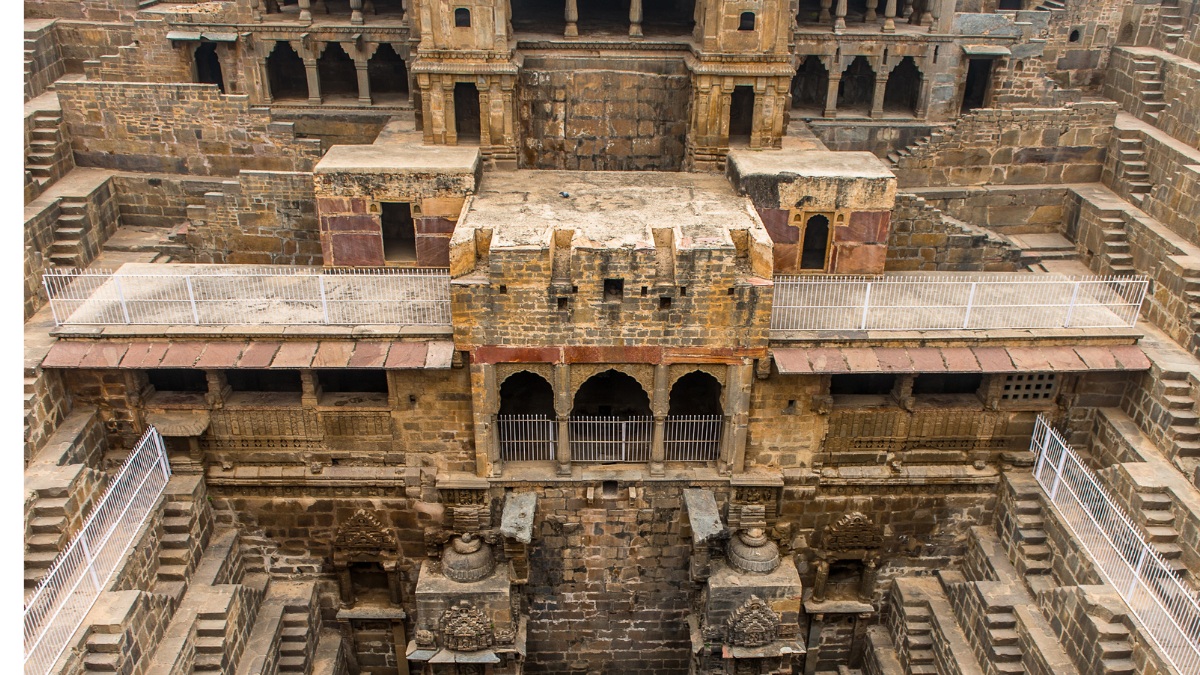
After breakfast at the hotel, we drive down to Agra, but en route we stop over at Abhaneri, situated about 95 kms. from Jaipur. This little village has one of Rajasthan’s most awesome ‘baoris’ (= stepwells). It is around 30 metres deep and among the largest stepwells in India. It not only stores water but is also very effective for groundwater harvesting. This stepwell, famous for its distinctive construction and a truly unique design, is one-of-a-kind and considered as the most picturesque in the world, which therefore naturally attracts a lot of attention from the visitors.
Fatehpur Sikri: This magnificent fortified ghost city was the capital of the Mughal Empire between 1571 and 1585, during the reign of Emperor Akbar. Although brilliant from an architectural point of view, Akbar’s city was erected in an area that was plagued by water shortages and it was abandoned shortly after Akbar’s death because of this.
Fatehpur Sikri’s beautiful and magnificent Jama Masjid (now brilliantly restored) is said to be a copy of the mosque at Mecca. The main entrance is through the impressive 54 metre-high Buland Darwaza (Victory Gate), considered as the tallest gateway in the world. It was constructed to commemorate Akbar’s victory in Gujarat.
In the northern part of the courtyard is the superb white marble ‘dargah’ or tomb of the sufi saint Shaikh Salim Chisti, who Akbar credited with bringing him a heir. The carved marble lattice screens (‘jalis’) are probably the finest examples of such work you will see anywhere in the country.
This amazing courtyard has many other wonders, such as the Palace of Jodh Bai, Birbal Bhavan, Panch Mahal and of course, Diwan-i-Khas (The Hall of Private Audiences) and ‘Diwan-i-Am’ (The Hall of Public Audiences). All these structures reflect the glory and the grandeur of the Mughal Empire. Upon arrival at Agra, we check-in at the hotel. In the afternoon.
(Distance 215 kms. / Travel time approximately 4 hours)
After breakfast, we proceed for a city tour to discover the Taj Mahal (Closed on Fridays). Described as the most extravagant monument ever built for love, this poignant Mughal mausoleum has become the ‘de facto’ tourist emblem of India.
The Taj Mahal was built by Emperor Shah Jahan as a mausoleum for his second wife, Mumtaj Mahal, who died in childbirth in 1631. Construction of this edifice built with pure white marble began in the same year and it took 22 years to finish the same. In total, a total of 20,000 people and craftsmen from India and Central Asia worked on the building.
The semi-translucent white marble, the exquisite screens, the fabulous carvings and ‘pietra dura’ inlay work (with thousands of semi-precious stones in beautiful patterns) are the most striking features of this spectacular mausoleum. Despite the effects of pollution and overexposure, a visit to the Taj Mahal is still an overwhelming experience and the monument seems as immaculate today as when it was first constructed.
We then continue our tour with a visit to the Agra Fort, on the bank of the Yamuna river. Construction of this massive red stone fort was begun by Emperor Akbar in 1565 and it was built primarily as a military structure.
The auricular fort’s colossal double walls rise over 20m in height and measure 2.5 km. in circumference. They contain a maze of buildings that form a small city within a city. The most impressive building to survive is the ‘Moti Masjid’ (Pearl Mosque), regarded by some as the most beautiful mosque in India. Other places of importance are ‘Diwan-i-Khas’, ‘Diwan-i- Am’, ‘Musammam Burj’ and Jehangir’s Palace.
After lunch, we make a halt at the exquisite ‘Itimad-ud-Daulah’, the tomb of Mirza Ghiyas Baig, the Persian gentleman, who was Emperor Jehangir’s ‘wazir’ or chief minister, and his beautiful daughter, Nur Jahan, later married the Emperor. She constructed the tomb between 1622 and 1628 in a style similar to the tomb she built for Jehangir near Lahore in Pakistan.
Although much less elaborate, many of the Itimud-ud-Daulah’s design elements foreshadow the Taj Mahal, earning it the nickname ‘Baby Taj’.
At the end of this visit, we return to Delhi. You have the time to refresh yourself after which dinner will be served. We then leave to arrive at the Delhi International Airport to catch your flight back to your country.
We thank you profoundly for availing our services and we hope that you were satisfied with our commitment of providing the best care and attention to you, our honoured guests.
We would like to believe that this visit was a wonderful vacation and we are certain that you will carry back cherished memories for a lifetime.
|
Excellent |
All |
|
Very Good |
0 |
|
Average |
0 |
|
Poor |
0 |
|
Terrible |
0 |