


Rajasthan is the heartland of India's cultural and historical diversity. A well-planned four-day itinerary allows you to explore some of the state's major cities, ensuring a time-efficient and memorable experience for tourists. A balanced combination of Jaipur, Ajmer/Pushkar, and Jodhpur provides a complete experience of sightseeing, heritage, and local culture.
This four-day itinerary is particularly convenient for tourists as it minimizes the stress of long journeys and allows ample time in each city. There is sufficient time to visit the palaces, forts, and Hawa Mahal in Jaipur. The meditative and spiritual atmosphere of Ajmer and Pushkar, with their unique temples and the beauty of Pushkar Lake, brings peace to the minds of tourists. Jodhpur's famous Mehrangarh Fort and the city's traditional markets provide a wonderful experience before the end of the trip.
This four-day route is not limited to just sightseeing; it also introduces you to Rajasthan's local food, handicrafts, and culture. This time-efficient and well-planned itinerary ensures a rich and enjoyable experience for travel enthusiasts.
What to see in a 4-day Rajasthan trip plan: Jaipur » Ajmer/Pushkar » Jodhpur
The 4-day Rajasthan itinerary offers a comprehensive experience for tourists. The journey begins in Jaipur. You can explore historical and captivating structures like the City Palace, Hawa Mahal, and Amber Fort in Jaipur. Local handicraft markets and local cuisine also add to the experience.
The next destination is Ajmer and Pushkar. The main attraction in Ajmer is the Ajmer Sharif Dargah, where a unique blend of spirituality and architecture can be seen. The tranquil and natural environment of Pushkar, the Pushkar Lake, and the Brahma Temple provide peace of mind to tourists. There is also an opportunity to explore local handicrafts and colorful markets in Pushkar.
Finally, the journey reaches Jodhpur. This city is known as the 'Blue City'. Exploring Mehrangarh Fort, Jaswant Thada, and the City Market allows you to appreciate the unique heritage and architecture of Rajasthan. Additionally, experiencing the local cuisine and Rajasthani culture completes the travel experience.
This route is cost-effective for tourists in terms of both time and money, offering the opportunity to see some of Rajasthan's best attractions together.
Upon arrival at the airport or railway station, you will be warmly welcomed and greeted by our friendly representative. They will assist you with a smooth transfer to your hotel for check-in, ensuring you start your journey comfortably. This marks the beginning of your exciting Rajasthan trip plan for 7 days, where you’ll explore the vibrant culture, majestic forts, and rich traditions of the region. Get ready for an unforgettable adventure through the heart of Rajasthan!
After breakfast, we will visit Amber Fort, located about 12 km from Jaipur. It was the ancient capital of the Kachhwaha Rajput rulers. This unique wonder is a must-see on any tourist itinerary in Rajasthan. Construction of the fort and palace began in 1592 by Maharaja Man Singh, Akbar’s Rajput general. The Jai Singh family later expanded it before shifting their capital to Jaipur.
The fort is a magnificent example of Rajput architecture, situated on a magnificent hillside overlooking a lake. You will truly enjoy ascending the palace on the back of a gilded elephant. We will visit the numerous rooms and corridors of the palace, which are famous for their design and decoration.
In the afternoon, we will go on a tour of the iconic buildings of the city. First up is Jantar Mantar, a magnificent stone observatory built by Raja Jai ??Singh in 1728, known for his passion for astronomy. The Jaipur Observatory is the largest and best preserved of the five he built, the other four being in Delhi, Varanasi, Ujjain and Muthura.
We then visit the magnificent City Palace, a former royal residence built in a blend of Rajasthani and Mughal styles. The palace houses excellent museums displaying an outstanding collection of miniatures, traditional costumes and an armoury.
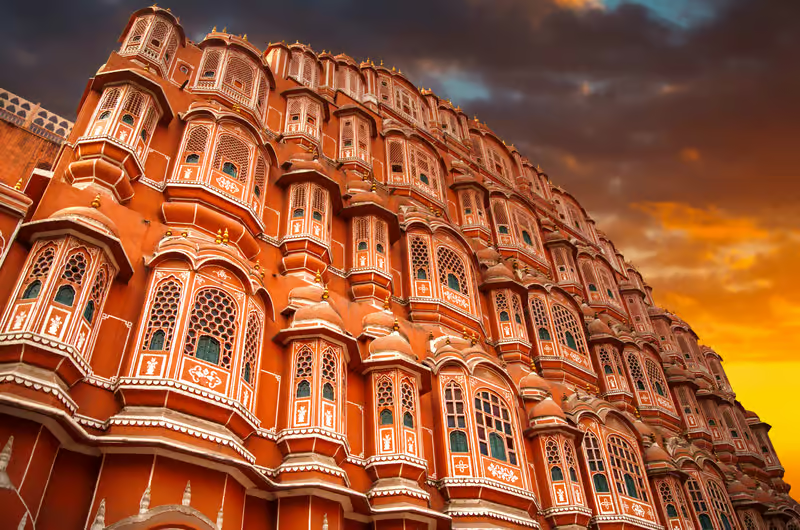
Later, we drive past the intriguing Hawa Mahal (Palace of Winds), one of Jaipur’s main landmarks. Built in 1799, this five-story structure is a magnificent example of Rajput art. It was originally built to allow the women of the royal family to observe the daily life and parades of the city.
(340 Kms. / 6 Hours)
After breakfast, we first drive down to Jodhpur en route we visit Pushkar and stop at AJMER, located just 11 km from the town of Pushkar.
Ajmer, a rapidly growing town on the banks of the Ana Sagar River, has always been a town of military and historical importance, right from the time of Muhammad of Ghori who sacked it at least once during his regular and plundering expeditions from Afghanistan. Much later, and from the time of the Mughal Emperor Humayun, it became a favorite resort of the mighty Mughals.
It must be noted that one of the first Mughal-British contacts took place in Ajmer when Sir Thomas Roe, the English ambassador, met Emperor Jehangir there in 1616.
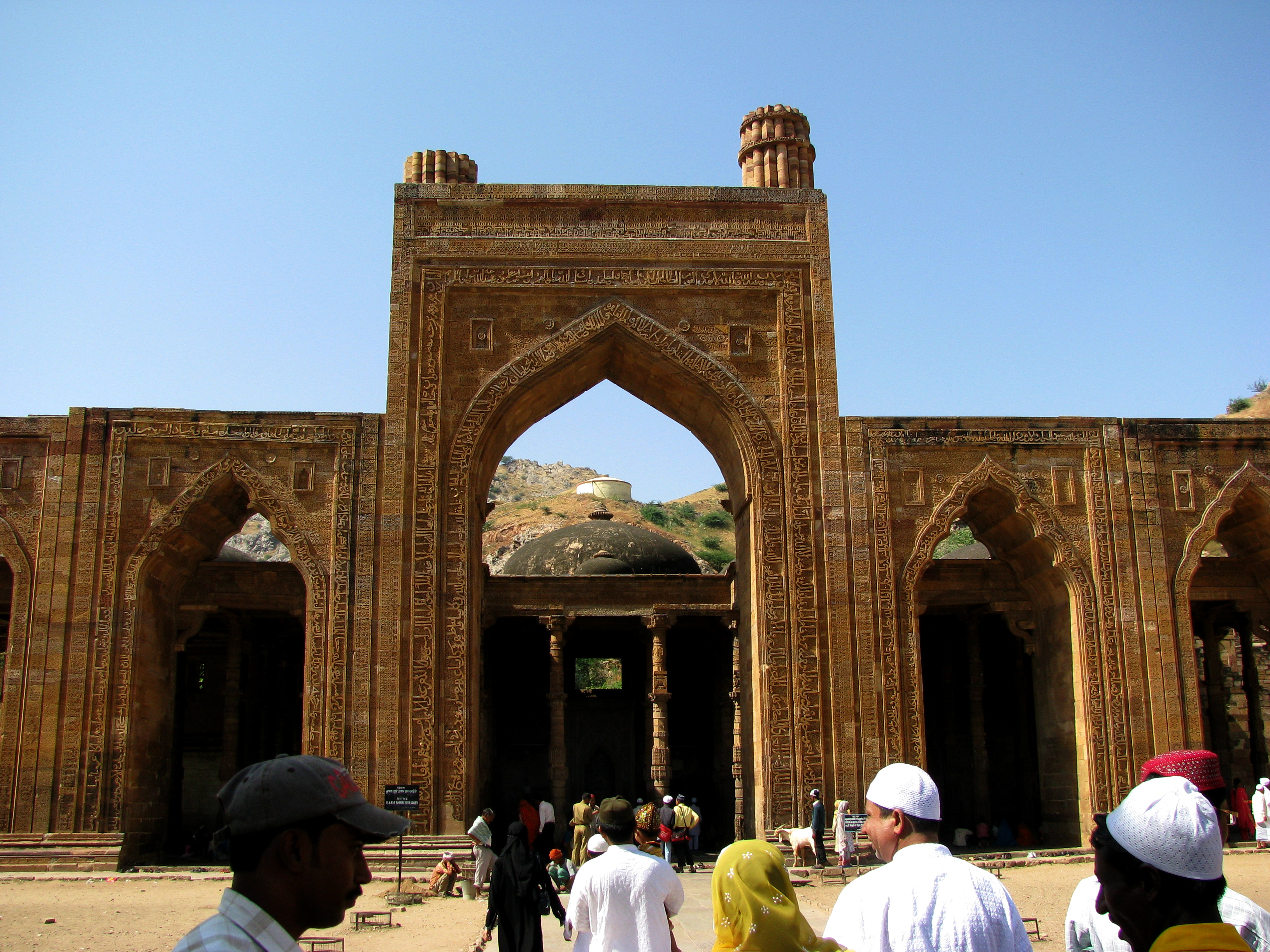
Today, Ajmer is a world-famous pilgrimage site for Muslims (as well as people of other faiths) who visit the sacred shrine of the Sufi saint Moinuddin Chisti, who came to Ajmer from Persia in 1192 AD. He is also popularly known as “Hazrat Khwaja Garib-e-Nawaz”, abbreviated as “HKGN”, which is often found inscribed on Muslim-owned trucks.
This “dargah” (=tomb) has the distinction of being the most visited Muslim shrine in the entire world and it is recorded that the mighty Emperor Akbar made a pilgrimage to this place every year, during the annual “Urs” held to mark the saint’s birthday.
PUSHKAR:
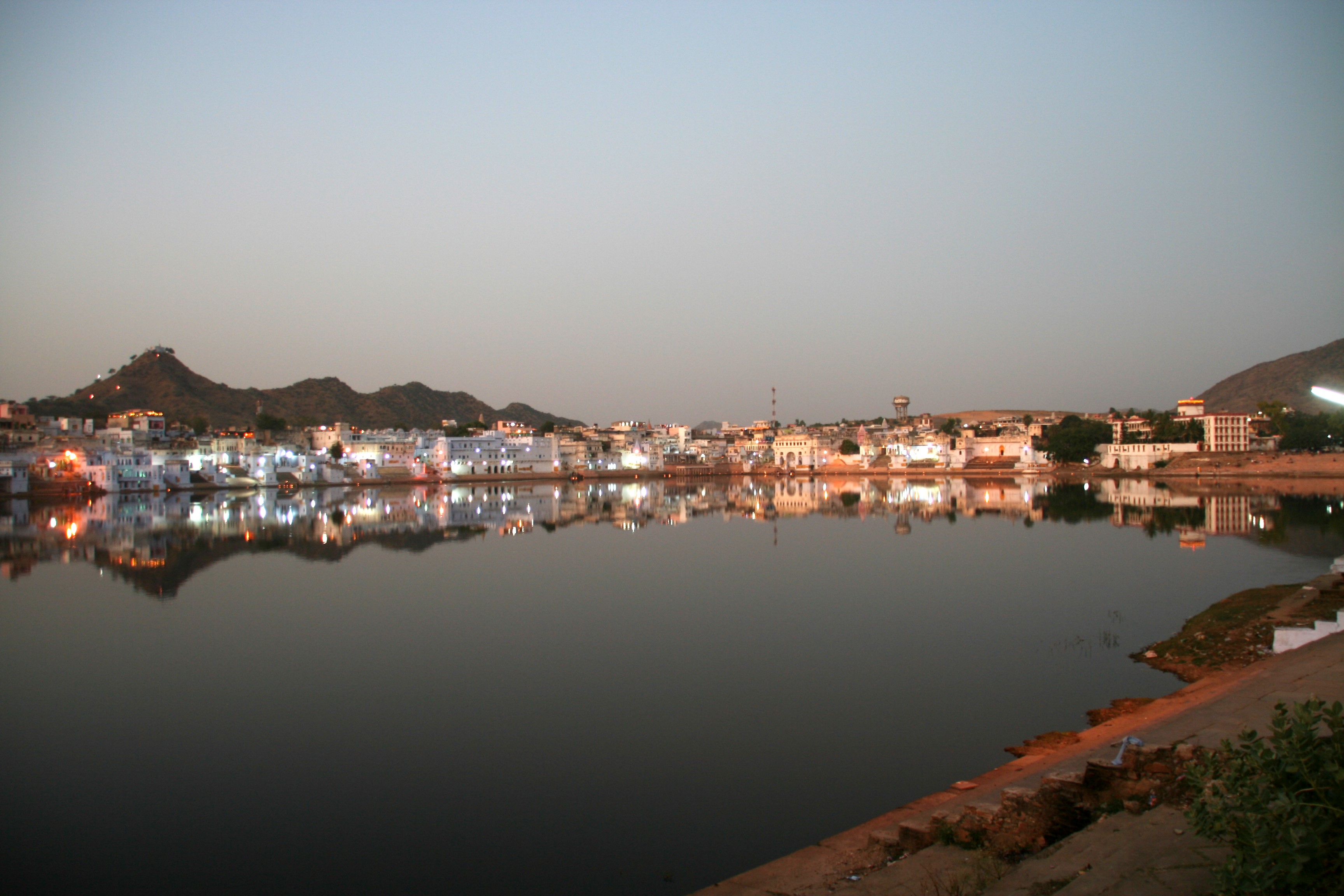
Pushkar, a charming little town, stands on the edge of the desert and is separated from Ajmer by the “Nag Pahar” or “Snake Mountain”.
This town is perhaps best known for its annual camel fair, a huge gathering of camels, cattle and livestock that takes place on the full moon night of the “Karthik” month of the Hindu calendar.
Another special feature of this town is the “Brahma Temple”, said to be one of the few temples in the world dedicated to “Brahma”, the creator and Lord of the universe. It is marked by a red tower and over the entrance gate is “his” (=swan, symbol of Brahma), who is said to have personally chosen Pushkar as the place and location. Then we continue our drive towards Jodhpur
After breakfast, we drive down to Jodhpur and upon arrival, we check into the hotel. Later, we go on a sightseeing tour of Jodhpur, which is the second largest city in Rajasthan. It is also known as the “Blue City” of India. It was the traditional capital of the larger kingdom of Marwar and specifically the kingdom of Jodhpur. It was founded by Rao Jodha in 1459. Jodhpur is located near the geographical center of Rajasthan and this makes it a central and convenient base for travel to other major tourist destinations like Udaipur, Jaisalmer, Bikaner and Jaipur.
We start our tour by visiting the Mehrangarh Fort which built the grand and majestic Mehrangarh Fort, which covers an area of ??almost 2000 acres. This structure is built of red sandstone and has intricately decorated large carved panels and lattices with unique designs. (Although the original fort was built in the mid-15th century, most of the existing structures date back to the 17th century.)
The present-day city of Jodhpur is largely built around the Mehrangarh Fort, which is surrounded by a fortified wall with several gates. The town offers several other popular tourist attractions, including many smaller forts, palaces, and temples, all set in the rugged landscape of the Thar Desert.
Another very interesting place to visit is the “Jaswant Thada”, a very impressive marble monument built in 1899 by Maharaja Sardar Singh in memory of his father, Maharaja Jaswant Singh II. This monument features carved pavilions and a terraced garden built around a small lake. The area around this monument also serves as a cremation ground for members of the royal family and rulers of Marwar. There is also a very interesting exhibition hall of the rulers and Maharajas of Jodhpur.
We also get to see the iconic “Clock Tower”, a landmark, as it was the only way for the locals to keep track of time in the past. You can get a magnificent view of the city from the top of this tower.
On time you will transfer to the Jodhpur Airport / Jodhpur Railway Station for your next destination.
|
Excellent |
All |
|
Very Good |
0 |
|
Average |
0 |
|
Poor |
0 |
|
Terrible |
0 |